1. Introduction
Given the increasing urgency to align financial flows with the Paris Agreement, Multilateral Development Banks (MDBs) have committed to ensuring that their operations support a climate-compatible development pathway. Yet, despite published methodologies and stated commitments, questions remain about how robust and transparent MDBs’ Paris alignment assessments of individual operations really are.
Germanwatch has been closely following these developments and has engaged in a multi-step analysis of MDBs’ Paris alignment efforts. In a first step, Germanwatch reviewed the methodological approaches MDBs use to assess their operations’ alignment with the mitigation and adaptation goals of the Paris Agreement. In a second step, Germanwatch examined the transparency and public disclosure of MDBs’ Paris alignment assessments across individual operations. The present blog post takes a third step: it assesses the quality of Paris alignment assessments conducted by MDBs, using two concrete case studies as examples to illustrate how well MDBs are living up to their Paris promise.
These two cases are:
- The Regional Gasification Project in North Macedonia, financed by the European Bank for Reconstruction and Development (EBRD) via a sovereign-guaranteed loan
- The Inclusive and Sustainable Growth Development Policy Financing (DPF) Programme in Sierra Leone, supported by the World Bank’s International Development Association (IDA) via a grant
Selection of project cases
Both cases were selected not only for their sectoral relevance to the climate – energy infrastructure and natural resource governance – but also because they offer insights into two very different MDB instruments: investment lending and development policy finance. Crucially, both projects include documentation of the MDBs’ internal Paris alignment assessments, allowing for an analysis of how well the MDBs’ stated methodologies are implemented in actual practice. While the EBRD does not disclose its full Paris alignment assessments, it typically provides relatively comprehensive summaries in the Green Annex of board reports for sovereign projects. The World Bank, by contrast, usually publishes only a short summary, often limited to a single paragraph. In the case of the Sierra Leone DPF programme for Inclusive and Sustainable Growth examined here, a more detailed assessment is available, offering an opportunity for some deeper analysis. As shown in our previous blog, the level of transparency around Paris alignment assessments varies widely – not just between different MDBs, but even within the same institution. Public documentation ranges from no available information to single-sentence or single-paragraph summaries, to more extensive summaries, and in some cases (such as certain Inter-American Development Bank projects) even full Paris alignment assessments.
Objective of this blog post
This blog post does not seek to single out or compare MDBs, nor to rank their performance. Rather, it uses these two case studies to highlight broader, systemic weaknesses in how Paris alignment is currently being implemented by MDBs. By doing so, it also raises important questions about the robustness and consistency of the joint MDB methodological principles for Paris alignment. These insights allow us to consider whether these principles are adequate and sufficiently robust to ensure credible alignment with the goals of the Paris Agreement.
The findings presented in this blog post are based on two in-depth reviews of the selected projects’ Paris alignment and the quality of their respective assessments. The review of the EBRD’s Regional Gasification Project in North Macedonia was carried out by Bankwatch, while the Foundation for Agriculture & Environmental Conservation (FAEC) conducted the review of the IDA-financed Inclusive and Sustainable Growth Development Policy Financing Programme in Sierra Leone. Drawing on these independent assessments, this blog post evaluates the credibility, quality, and completeness of the Paris alignment assessments for both projects, with the aim of identifying lessons to strengthen MDB practices going forward.
2. How a gas pipeline passed a climate test
johnNaturePhotos/Pixabay
Another pipeline leading nowhere
Project snapshot: EBRD North Macedonia Regional Gasification Project
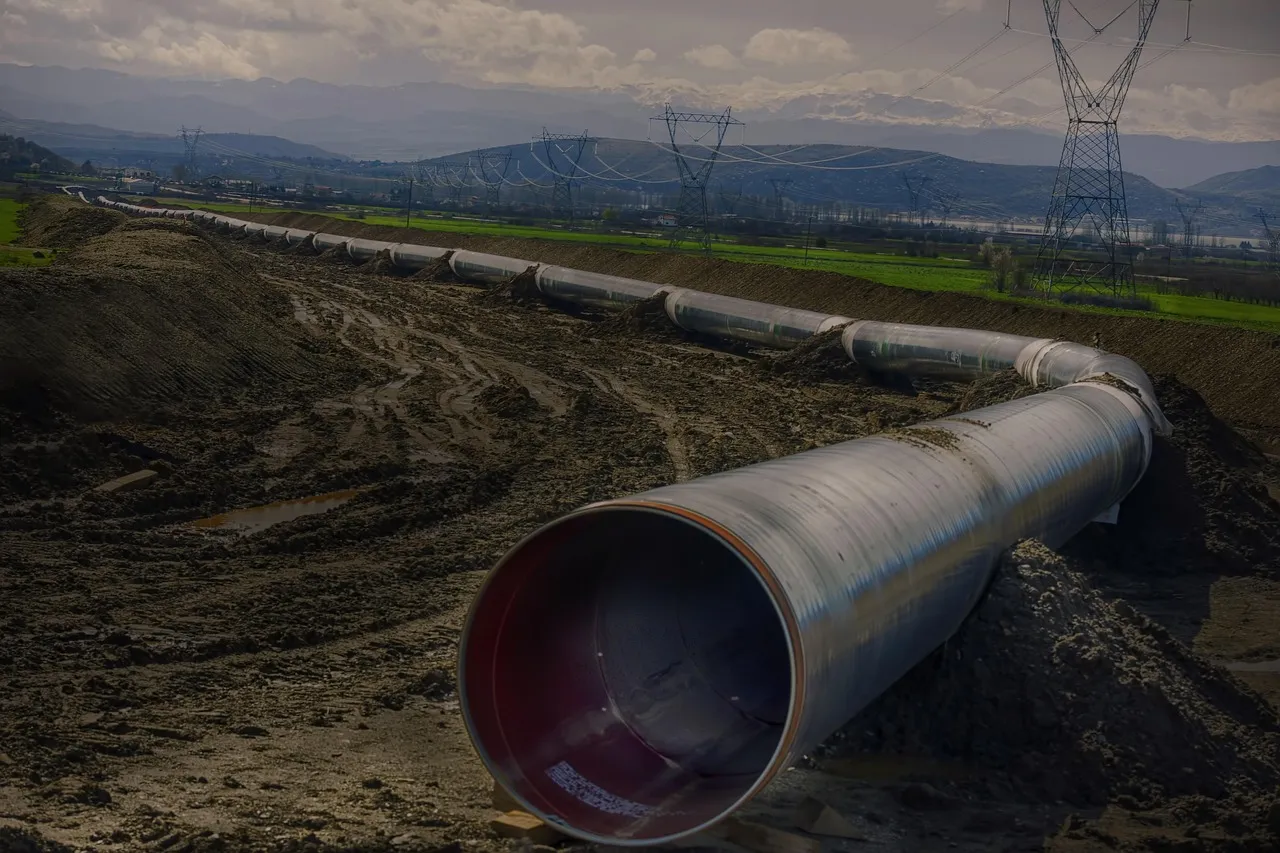
In April 2024, the European Bank for Reconstruction and Development (EBRD) approved a EUR 98 million sovereign loan to support the Regional Gasification Project in North Macedonia, implemented by the state-owned company NOMAGAS. The project includes three main components: the construction of a gas interconnector between Greece and North Macedonia (123 kilometres in total, with 66 kilometres on the North Macedonian side), and two new domestic transmission pipelines – Gostivar to Kichevo (34 kilometres) and Sveti Nikole to Veles (28 kilometres).
The project is intended to strengthen the country’s energy infrastructure and enhance energy security by diversifying natural gas import routes. North Macedonia currently relies on a single import pipeline from Bulgaria. The interconnector is designed to provide access to additional supply sources through Greece. While the project’s planned transmission capacity has been adjusted over time, it is designed to accommodate anticipated future increases in domestic gas demand and regional energy connectivity. As of November 2025, construction has reportedly started in both countries, though preparatory measures such as expropriation are still ongoing in North Macedonia.
The EBRD’s gas financing policy – loopholes undermine climate promises
As Bankwatch’s assessment reveals, a closer look at the Bank’s support for the North Macedonian pipeline project shows how flexible interpretations of climate tests allow fossil gas funding to continue. The EBRD has significantly reduced fossil fuel financing in recent years. But under its Energy Sector Strategy (2024–2028), it still allows investment in midstream and downstream gas projects – if they meet a set of tests specified in the EBRD’s Paris alignment methodology. These include consistency with national plans, avoiding carbon lock-in, and proving environmental and economic viability. Yet many of these criteria are vague, leaving room for interpretation.
North Macedonia’s pipeline project: Paris-aligned?
In a redacted document that summarises the results of the Paris alignment assessment and that was shared with its board, the EBRD declared the project Paris-aligned. However, this document was only publicly disclosed after EBRD board approval, and, as the following points illustrate, its conclusion is flawed.
- Critical emissions neglected
The Bank’s analysis excluded emissions from gas combustion and upstream production triggered by the new pipeline, counting only pipeline construction and methane leaks within North Macedonia. Estimates by the Environmental Law Alliance Worldwide (ELAW) suggest total annual emissions could reach 3 million tonnes of CO₂ — equal to half of the country’s 2030 climate target.
- Outdated national climate plans stretched
The EBRD justifies its support for a gas pipeline in North Macedonia by citing alignment with the country’s Energy Strategy and National Energy and Climate Plan (NECP). However, both documents are outdated and vague – mentioning the pipeline but providing no details on needed capacity, specific industrial use, or why cleaner alternatives wouldn’t suffice. Since their adoption, North Macedonia made proposals for up to 750 MW of new gas-fired power plants, far exceeding what the NECP envisioned under any scenario. However, the NECP did not refer to a transition to net zero emissions and only included projections up to 2040 because North Macedonia had not completed its long-term strategy at that time. This points to the general problem of MDBs relying on national plans without assessing whether those are actually Paris aligned.
- Scenario modelling flawed – no coherence of underlying assumptions
The EBRD’s modelling compares three pathways: business-as-usual (BAU), gasification, and electrification. But the BAU scenario assumes coal plants will operate well past 2035 – an unrealistic baseline, given their poor condition. This inflates the benefits of switching to gas. Meanwhile, the electrification scenario is weighed down by assuming expensive and speculative carbon capture (CCS) for hard-to-abate sectors, while not applying the same underlying assumptions to the gasification scenario. Conversely, the gas scenario assumes a rapid switch to hydrogen and electrification after 2040 – an optimistic leap unsupported by current technology and economics.
- Lock-in risk downplayed
The Bank claims the project won’t cause carbon lock-in because the pipeline is ‘hydrogen-ready’ and pays off in seven years. But gas infrastructure typically lasts decades. North Macedonia has no green hydrogen production capacity and little chance of scaling it before 2050. That means either continued gas use – or a stranded pipeline given the lack of local green hydrogen production and the unlikelihood of importing it due to the expected limited availability of green hydrogen and high costs for imports. Plans for a possible future gas interconnector to Serbia are being discussed as a mitigation option – but these are speculative, not included in modelling, and lack a timeline. They might also result in an increased lock-in for Serbia.
- Economic benefits exaggerated
The Bank claims the gas option yields EUR 27 billion in net benefits by reducing air pollution and accelerating coal phase-out. But this rests on the assumption that thousands of new users will connect to the gas network – even though only 534 users have done so in the past 13 years. If users must pay for network extensions, tariffs will likely be unaffordable. The economic modelling also assumes rapid gas uptake in industry, followed by an orderly transition to green hydrogen or electrification after 2040 with full decarbonisation by 2050 – an expensive and uncertain pathway that lacks a credible foundation.
Conclusion: A risky bet on gas shows the need for stricter alignment criteria
While the EBRD’s strategy sets out safeguards for Paris alignment, the North Macedonia case shows how these can be interpreted loosely and flexibly. By relying on outdated plans, flawed scenario modelling, and incomplete emissions accounting, the Bank is enabling fossil gas infrastructure under the guise of transition support – at the risk of stranded assets and long-term fossil fuel dependence.
To improve credibility, the EBRD should adopt stricter criteria and exclude all fossil fuel financing in line with 1.5°C pathways, while not overly depending on national plans that may have gaps or outdated targets. Modelling must be conducted early in the project planning phase, realistically reflect business-as-usual scenarios, avoid inclusion of unproven technologies without alternatives, ensure that emission assumptions are realistic, and transparently disclose all assumptions and results before board approval. Additionally, assessments should consider the full lifetime of the infrastructure to be created by the project and involve all affected countries. Implementing these steps will help the EBRD and other MDBs to better align their investments with climate goals and support more informed and transparent decision-making.
3. Financing reforms on a questionable climate policy basis

James Dalrymple/Shutterstock
The mountains of Freetown, Sierra Leone
Project snapshot: IDA Inclusive and Sustainable Growth Development Policy Financing (DPF) – Sierra Leone
The World Bank’s Third Inclusive and Sustainable Growth DPF programme for Sierra Leone supports a package of policy and institutional reforms aligned with the government’s national development priorities. IDA DPF programmes provide budget support to governments for implementing agreed policy reforms. This particular DPF programme is structured around three key pillars: (1) enhancing economic diversification and competitiveness through reforms in business regulations, agricultural value chains, and mining sector policy; (2) strengthening transparency and accountability in natural resource management, including measures related to mining, fisheries, and land governance; and (3) promoting inclusive access to basic services and strengthening climate resilience, particularly in the areas of social protection and public service delivery.
The DPF programme is financed through a USD 65 million grant from IDA and builds on earlier operations in the same reform series. The programme includes references to climate resilience and environmental governance, particularly under the third pillar. The programme forms part of Sierra Leone’s broader development strategy and includes both economic and social policy components with cross-cutting relevance to sustainable development objectives.
As the FAEC assessment shows, the World Bank’s Paris alignment review of Sierra Leone’s Inclusive and Sustainable Growth DPF programme demonstrates how a methodology can fall short when applied without sufficient stringency. Although the World Bank’s instrument methods for Paris alignment require DPF operations to be tested for mitigation and adaptation alignment using a three-step, risk-based process in line with the joint MDB methodological principles for alignment, the disclosed information on the assessment relies largely on generic governance and resilience references. It does not rigorously examine risks of carbon lock-in, transition challenges, or whether reforms genuinely enhance climate resilience.
- Resilience opportunities not systematically integrated
Despite Sierra Leone being among the world’s most climate-vulnerable countries, climate risk management is not systematically embedded in the DPF proposal. Adaptation is addressed only superficially, with generic references to resilience but little connection to key risks such as urban flooding, coastal erosion, and landslides. This creates the danger that urban planning reforms overlook hazards in Freetown, the country’s capital, and that social protection measures fail to reflect climate-specific vulnerabilities, especially for women in agriculture and the informal sector. Ecosystem-based options like mangrove restoration or urban greening are also left aside, limiting transformative potential. Crucially, the World Bank’s Paris alignment assessment did not capture these omissions, understating adaptation gaps and leaving uncertainty over whether the DPF genuinely supports a climate-resilient pathway.
- Incomplete mitigation screening and overlooked transition risks
The focus of the alignment assessment is limited to direct project outputs, while systemic drivers of emissions, such as fossil fuel tax exemptions, are disregarded. Mining reforms are reviewed mainly through a governance lens, without considering their potential to increase emissions through expanded extractive activity. The alignment assessment also lacks an analysis of transition risks, including stranded assets like widespread diesel generators, and offers no just transition planning for affected workers and communities. Finally, no emissions profiling or benchmarking against Sierra Leone’s NDCs was undertaken, leaving only a fragmented picture of the programme’s mitigation relevance.
- Limited use of local data and climate context
In the disclosed information on the DPF programme’s Paris alignment, the World Bank leaned heavily on international frameworks while making little use of the wealth of local data available. Vulnerability maps developed by the Environmental Protection Agency and disaster risk profiles from the National Disaster Management Agency were not sufficiently integrated into the assessment. Likewise, the assessment did not take into account recent climate shocks such as recurrent urban flooding that continue to shape the country’s risk landscape. Most importantly, the DPF reforms were not explicitly checked against the priorities and targets of Sierra Leone’s 2021 updated NDC, leaving a weak link between national climate commitments and the Paris alignment assessment.
- Lack of transparency and methodological rigor
Equally concerning is the limited transparency around how the Paris alignment screening was carried out. The applied methodology was not disclosed, making it impossible for third parties to replicate or verify results. No structured process of consultation with local stakeholders is documented, raising questions about whether the perspectives of national experts, civil society, and vulnerable communities were taken into account. Finally, the absence of clearly defined scoring criteria for judging reforms as ‘aligned’ or ‘not aligned’ renders the conclusions opaque and undermines their credibility.
Conclusion: Uncertain alignment, missed opportunities
Taken together, Sierra Leone’s Inclusive and Sustainable Growth DPF programme has the potential to contribute proactively to the goals of the Paris Agreement. Yet the project document and the disclosed information on its Paris alignment assessment do not adequately address climate issues, nor the related risks and opportunities embedded in the proposed policy reforms. While the reforms may indirectly strengthen governance and resilience, they fall short of embedding low-carbon and climate-resilient pathways into the core policy framework. Ultimately, whether this IDA-financed DPF programme can be considered Paris aligned will depend on how the envisioned reforms are implemented in practice and the extent to which climate considerations are applied consistently. Attaching mandatory guidelines to the World Bank’s Paris alignment assessment for this programme – and following up on them through systematic reporting – could help reduce this uncertainty. Without such steps, however, the DPF risks overlooking systemic drivers of emissions and climate risk, potentially locking Sierra Leone into a high-carbon, climate-vulnerable development trajectory.
This case study highlights the need for MDBs to move decisively beyond a ‘climate-neutral’ approach in policy lending. Comprehensive mitigation screening, systematic use of national climate data, and early, transparent consultation with local stakeholders are essential. If designed with strong climate conditionalities, DPF programmes could become powerful levers for transformative change. Without these, as the Sierra Leone case demonstrates, they risk entrenching rather than overcoming climate vulnerabilities.
4. Cross-cutting lessons from both case studies
Recommendations for MDBs: Enhancing transparency, rigour, and accountability in Paris alignment
The case studies show that even when information on Paris alignment assessments is published, it often contains critical weaknesses, from methodological blind spots to opaque assumptions or insufficient scrutiny of indirect and long-term impacts. The following recommendations are key for MDBs to move from commitments on Paris alignment to credible implementation.
- Full disclosure: MDBs must publicly disclose full Paris alignment assessments before board approval, including comprehensive information on the specific methods and data used for key calculations, particularly for modelling emissions and economic viability for different scenarios. This is important to enable independent external verification of the results and to offer the chance to receive and consider input from civil society organisations and other stakeholders.
- Strengthening objectivity: Alignment assessments must be conducted by more than one expert to strengthen objectivity, because current methodologies lack clearly defined thresholds and definitions. Ideally, these experts should be independent of bank staff, who may be biased after investing significant time and resources into a project. A minimum requirement should be an independent Paris alignment verification of a random sample of at least 20% of projects.
- Timely assessment of alignment: Paris alignment must be integrated early on during country programming and project conception phases, as projects brought to the board are unlikely to be rejected; abstentions are often the only form of dissent, which is insufficient as projects can still receive approval.
- Mandatory consultations: Public consultations with national stakeholders on the Paris alignment assessment should be mandatory, documented, and made available to board members to enable truly informed decisions.
- Integration of alignment in reporting: MDBs also need to include Paris alignment criteria in project and programme reporting and evaluations, particularly for DPF programmes, to track and verify climate outcomes over time. Particularly for development policy financing, the MDBs could, based on the results of an DPF programme’s Paris alignment assessment, provide mandatory Paris alignment guidance for that particular DPF programme’s implementation. They could follow-up on the application of such Paris alignment guidance throughout programme implementation.
- Moving from ‘do no harm’ to ‘do good’: MDBs must move beyond a ‘do no harm’ approach and actively seek climate-positive opportunities from the very inception of country dialogue, aligning their investments with ambitious climate goals and fostering sustainable development.