The Green Weimar Triangle is a framework for climate cooperation between Poland, Germany, and France at state, science, economic, and civil society levels.
Why do we need a Green Weimar Triangle?
For an effective and just European climate policy, influential Member States must be especially committed: Poland, Germany, and France make up over 40 percent of the EU population and are responsible for almost half of the EU’s emissions and industrial output.
Furthermore, the three countries represent the range of economic, political, and social challenges that Member States are facing as a result of the climate crisis. An intensified interstate dialogue between Eastern and Western Member States is urgently needed to account for the different national realities on the way to climate neutrality.
Increased mutual understanding and more trilateral cooperation are a major chance for an ambitious and socially just implementation of the European Green Deal for the whole of the EU.
Our Publications
What does Germanwatch do?
Since 2021, Germanwatch is campaigning for the institutionalisation of the Green Weimar Triangle as a permanent platform for climate cooperation between the three countries. Our aim is to constructively resolve tensions surrounding climate policy and to collectively develop solutions for a climate neutral future rooted in stability, public acceptance, and future viability.
Our goals

Institutionalising the Green Weimar Triangle on governmental level

Supporting trilateral and bilateral climate cooperation, including on non-state level

Incorporating the three countries’ perspectives in EU climate policy processes early on to reduce conflict potential

Increasing the visibility and political relevance of the Green Weimar Triangle
Our activities
- Once a year, we invite high-level representatives of governments, business, and academia from the three countries to discuss topics such as the Clean Industrial Deal, ETS-2, and electrification. The value of our conference lies in its international and intersectoral composition. This enables an integration of economic competitiveness, social justice, and climate change mitigation. As such, our conference contributes to the EU ambition to leave no one, neither countries nor sectors, behind on the path to climate neutrality.
- Our High-Level Conference takes place as part of the Genshagen Energy and Economy Dialogue in the Weimar Triangle framework, an initiative by the Genshagen Foundation, the German Energy Agency (dena), and Germanwatch.
- Past conferences:
- Over the past years, Germanwatch has built an intersectoral high-trust network with ministries and think tanks within the Weimar Triangle framework. This group not only enables direct communication paths between subject specialists on EU level but also creates trilateral durability despite frequent changes of government. Since 2021, Germanwatch organises roundtables with these representatives to discuss the possibilities of trilateral climate cooperation. As an established bridge builder, Germanwatch possesses a wide-ranging network as well as the necessary expertise to produce relevant outcomes for national and EU policy makers.
- German-Polish Activities
- German-Polish Energy Transition Forum
- Every year, Germanwatch organises a side event for the German-Polish Energy Transition Forum of the German Energy Agency (dena). The main points of discussion encompass structural change in coal and industry regions, social cushioning measures, German-Polish offshore wind cooperation, decarbonisation of the heating sector, and cross-border rail transport.
- Past events:
- 2026: Shared Challenges, Shared Solutions: Building Energy Resilience and Public Trust in Europe – A DE–PL Perspective
- 2025: The Social Dimension of the Energy Transition
- 2024: The Energy Transition in German and Polish Households
- German-Polish Energy Transition Forum
- German-French activities
- Participation in numerous committees and bilateral working groups to raise awareness for the value of bilateral climate cooperation. Germanwatch is part of the Franco-German Citizens’ Fund, among others.
- Events and reports on right-wing populism’s impact on bilateral climate cooperation.
- Green Weimar Triangle Recommendations
- July 2026: Resilience by Rail
- December 2024: Towards a Cohesive Clean Industrial Deal that Supports Net Zero
- Op-Eds
- March 2026 for Table.Media: The Weimar Triangle: How three countries can drive forward EU decarbonisation (in German and English)
- March 2026 for Rezczpospolita: Trójkąt Weimarski na czele elektryfikacji i reindustrializacji Europy (The Weimar Triangle leads electrification and re-industrialisation in Europe)
- July 2024 for Klimareporter (in German): Europas Green Deal ist in Gefahr (Europe’s Green Deal is under threat)
- July 2024 for Frankfurter Rundschau (in German): Folgen der Frankreich-Wahl 2024: Paris könnte zur Klimabremse werden (Consequences of the France 2024 elections: Paris could slow down climate action)
- April 2024 for Euractiv: Germany, Poland and France: Recasting a Green Weimar Triangle
- October 2021 for Tagesspiegel Background (in German): Neue Chancen für deutsch-polnisch-französische Klimaschutz-Kooperation (New opportunities for German-Polish-French climate cooperation)
- Analyses and contributions
- October 2025 for Friedrich-Ebert-Stiftung Warschau (in German): Chancen für eine deutsch-polnische Zusammenarbeit bei der Energiewende? (Opportunities for a German-Polish cooperation for the energy transition?)
- October 2025 for Friedrich-Ebert-Stiftung Warschau (in German): ETS2 als Brücke statt Barriere: Potenziale für eine deutsch-polnische Kooperation (ETS2 as bridge instead of barrier: Potential for a German-Polish Cooperation)
- 2024 for the France Yearbook of the German-French Institute (in German): Wandel gestalten: Deutsch-französische Antworten auf die Transformation unserer Gesellschaften (Shaping change: German-French answers to the transformation of our societies)
- Open letters
- April 2024: Deutschland, Frankreich und Polen: Das Weimarer Dreieck muss grün werden
- December 2022: Deutsch-französischer Motor für eine effiziente europäische Energiewende
- Oktober 2021 (in German): Zeit für ein Grünes Weimarer Dreieck
- Press releases and blogposts
- May 2024 (in German): Grünes Weimarer Dreieck sollte Impulsgeber für EU-Klimapolitik werden (Green Weimar Triangle should become a driving force for EU climate policy)
- January 2024 (in German): Zeit für eine neue deutsch-französische Klimadiplomatie (Time for a new Franco-German climate diplomacy)
- October 2021 (in German): Neue Chancen für deutsch-polnisch-französische Klimaschutz-Kooperation (New opportunities for German-Polish-French climate cooperation)
- Press coverage
- March 2026: Common press statement Green Weimar Triangle
- Februar 2026 (German): Press release by Transport Minister Patrick Schnieder for more transport cooperation in the Weimar Triangle format
April 2024: Press release by the Federal Foreign Office: A Weimar Agenda for a strong, geopolitical EU with reference to climate cooperation
Events
-
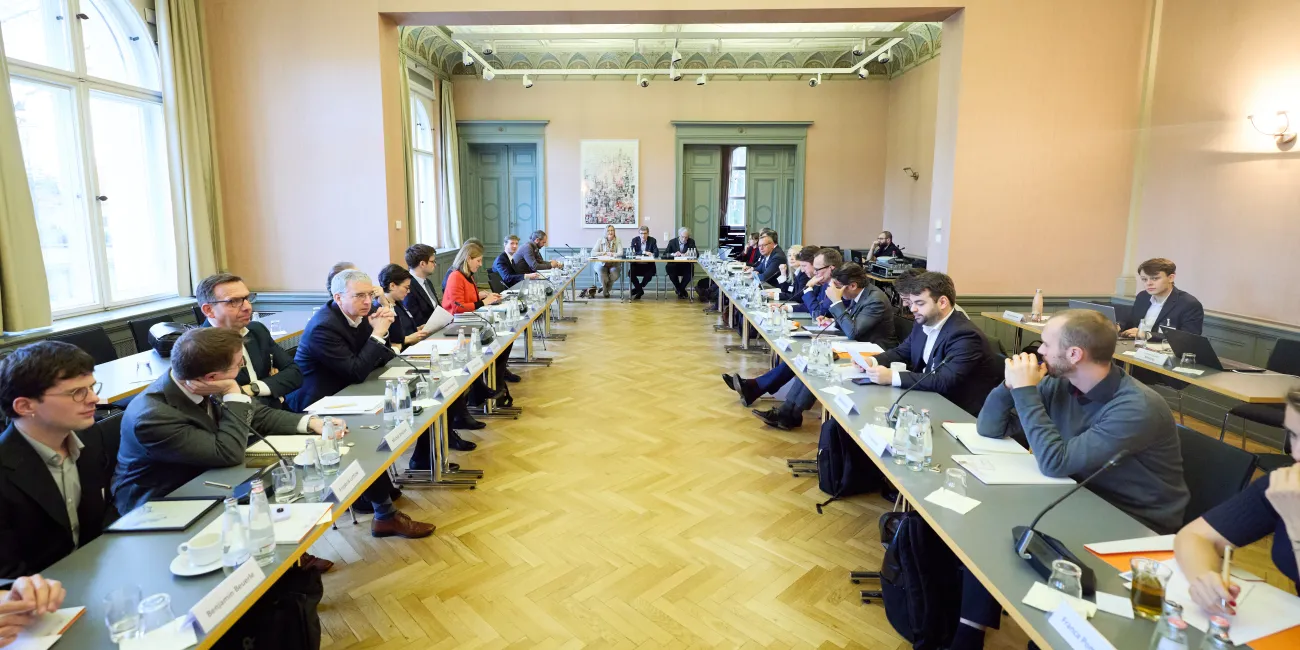
Our High-Level Conference on 8 December 2025 at Genshagen Castle: Germanwatch, in cooperation with the Genshagen Foundation, the German Energy Agency (dena), and the French Embassy in Berlin, invited 45 French, German, and Polish experts from politics, economy, and academia to attend our high-level conference as part of the Genshagen Economy and Energy Dialogue. At the centre of our debate were electrification as well as the effective and socially just implementation of ETS-2. The discussion included two panels with introductory remarks by Barbara Adamska, Achim Coenen, Rémy Garaude-Verdier, Jan-Kristof Wellershoff, Berthold Goeke, Jérôme Brouillet, and Charles Weymuller, moderated by Lea-Valeska von Gall and Jakub Wiech. A dinner and opportunity for informal conversations by the fire followed the discussion round. You can find a conference summary here.
-
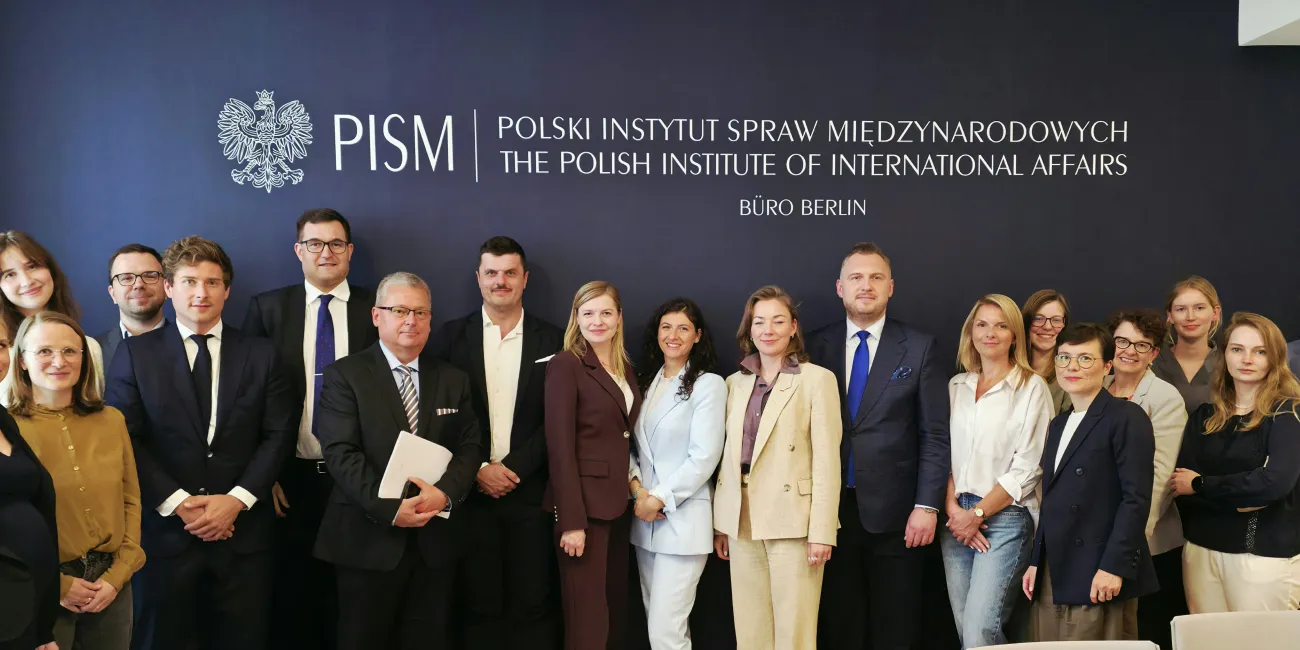
Our yearly German-Energy Dialogue as part of the German-Polish Energy Transition Forum on 8 June 2026 in the office of the Polish Institute for International Affairs: 20 experts from Poland and Germany, among them representatives of the environment and energy ministries, discussed energy resilience and public trust in the energy transition.
-
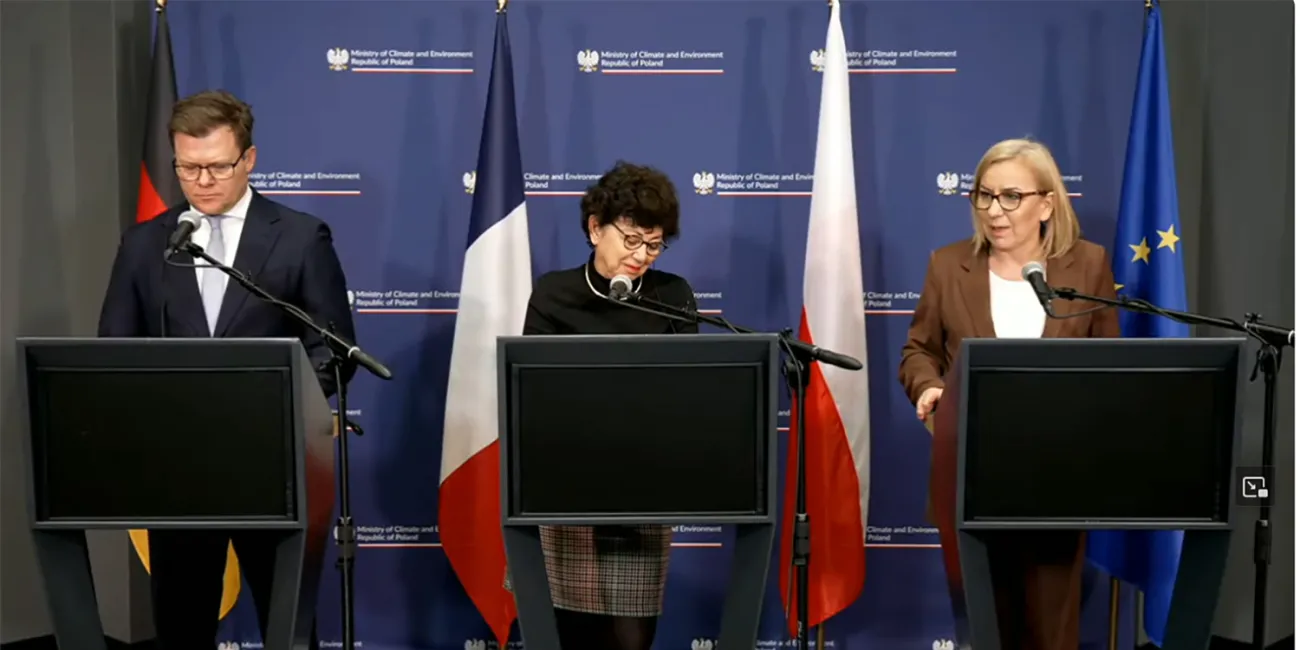
Historic event: On 9 March 2026, environmental ministers Carsten Schneider, Monique Barbut, and Paulina Hennig-Kloska met in the Polish city of Gniezno for the first time in 12 years. Their common press statement focused on circular economy, competitive decarbonisation, climate adaptation, and a stronger role for Europe in international climate summits. These topics, together with the significance of the Green Weimar Triangle for European climate policy, were underlined by Germanwatch in an op-ed for Table-Media shortly before the meeting. We also published a similar article in Polish, emphasising the Green Weimar Triangle’s importance for electrification and the future of European industrial production.
-
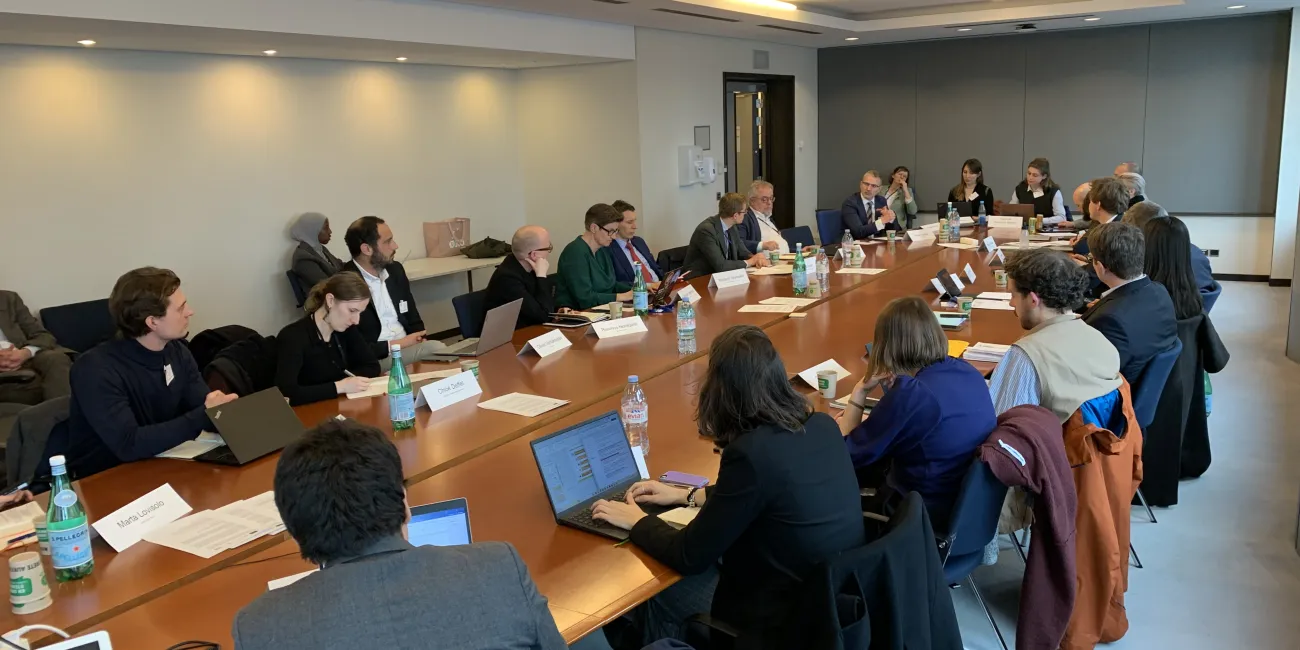
Our workshop at the European Parliament on 26 March 2025: Under the supervision of MEP Rasmus Nordqvist (Denmark, Greens), Germanwatch organised a workshop with national experts, think tanks, and government representatives from France, Poland, and Italy. We discussed national best practices and challenges in using EU funds to implement national climate policies.
History of the Green Weimar Triangle
August 1991
In Weimar, Germany: The Weimar Triangle is established by foreign ministers Hans-Dietrich Genscher, Roland Dumas, and Krzysztof Skubiszewski. The goal: to support European integration, identify shared challenges and interests, and increase Europe’s capacity to act.
July 2013
In Warsaw, Poland: The Weimar Triangle turns green: For the first time, the environment ministers Peter Altmaier, Philippe Martin, and Marcin Korolec meet.
February 2014
In Berlin, Germany: Environment ministers Barbara Hendricks, Philippe Martin, and Maciej Grabowski meet for the last time (for the time being), the Green Weimar Triangle is discontinued.
June 2021
Germanwatch establishes the format of the recurring ‘Green Weimar Triangle Roundtables’ with representatives from ministries, economy, science, and civil society.
October 2021
Germanwatch calls for the renewal of the Green Weimar Triangle in an open letter together with 13 other environmental organisations.
December 2024
Germanwatch establishes the format of the annual ‘Green Weimar Triangle High-Level Conference’ in cooperation with the Genshagen Foundation with representatives from governments, business, and science.
March 2026
March 2026
In Gniezno, Poland: After 12 years, the environment ministers Carsten Schneider, Monique Barbut, and Paulina Hennig-Kloska meet for the first time. The main fields for future cooperation are identified as circular economy, competitive decarbonisation, climate adaptation, and a stronger role for Europe in international climate summits.
With the support of