The global energy transition is at a critical juncture. Despite historic commitments at COP28 to triple renewables, double energy efficiency, and phase out fossil fuels in a just and equitable manner, investment remains dangerously uneven and insufficient. Multilateral Development Banks (MDBs) are uniquely positioned to help close this gap – yet their current contributions, including ongoing fossil fuel financing, fall short of what is needed.
The policy paper explores the role MDBs can play in delivering the COP28 energy consensus. Focusing on nine major MDBs, it assesses their current financing patterns, institutional priorities, and opportunities to scale up support for clean energy, energy efficiency, grids and storage, and just transitions. The analysis offers actionable recommendations to align MDB operations with global clean energy commitments and accelerate progress toward net-zero by 2050.
Further publications in this series:
Next to the policy paper, three factsheets summarise key findings and recommendations for each component of the Consensus. In addition, two case studies from the Republic of Congo and Nigeria provide practical insights from MDB activities on the ground.
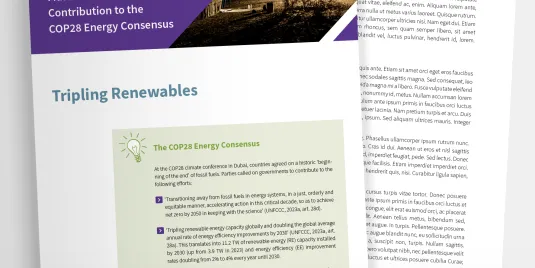
Factsheet #1 "Tripling Renewables"
Factsheet #1 summarises the state of MDB renewable energy financing in the context of the global energy transition and regional needs. It provides recommendations for MDBs and shareholders on how to strengthen the MDBs’ contribution. The recommendations cover financing instrument, regional focus, policy approaches and adjustments to internal governance as well as technical support and technological focus.
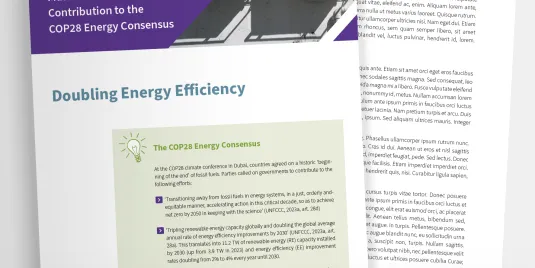
Factsheet #2 "Doubling Energy Efficiency"
Factsheet #2 summarises the state of MDB energy efficiency financing in the context of the global energy transition and regional needs. It provides recommendations for MDBs and shareholders on how to strengthen the MDBs’ contribution. The recommendations cover the focus sectors transport, buildings, and industry; adjustments to internal governance; regional focus; policy approaches; as well as opportunities for cooperation.
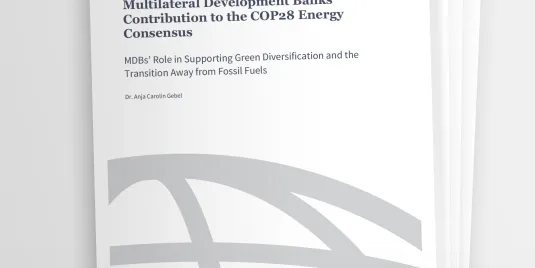
Policy Paper "MDBs’ Role in Supporting Green Diversification and the Transition Away from Fossil Fuels"
This paper focuses on green diversification as an area where MDBs can increase their support for the global transition away from fossil fuels (TAFF). It suggests different options for how MDBs can mainstream green diversification in their country support in order to 1) mitigate risks of fiscal downturn for fossil fuel producing countries, 2) to prevent new fossil exploiters from betting everything on fossil fuels, and 3) to help non-fossil countries leapfrog towards clean industries.
Case Study
Green Diversification, Just Transition and Development Financing in Nigeria: “How public development banks can finance a just Transition beyond fossil fuels”
This case study authored by Quest for Growth and Development Foundation, Nigeria, provides empirical insights into public development bank support for green diversification in Nigeria. Based on an assessment of Nigeria’s economic dependence on fossil fuels, the study evaluates Nigeria’s (future) potential for economic growth in climate-compatible sectors and activities, analyses how green diversification is politically anchored nationally and regionally, and assesses to what extent green diversification is anchored in activities of public development finance institutions operating in Nigeria.