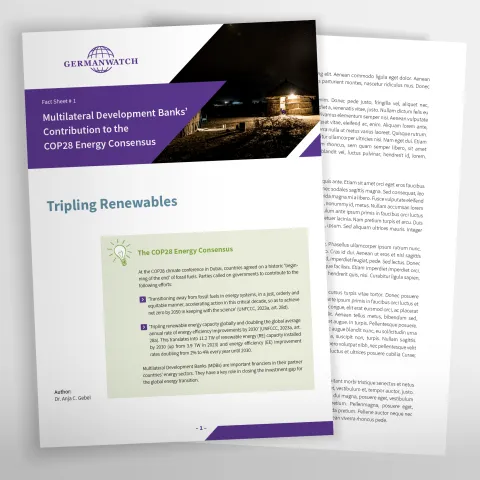
At COP28, UNFCCC member states agreed to triple renewable energy, double energy efficiency, and transition away from fossil fuels in a just and equitable manner, known as the COP28 Energy Consensus. Germanwatch has analysed its different components as well as the enabling connected technologies to provide recommendations on how multilateral development banks (MDBs) can best support the implementation of the consensus.
For each component of the COP28 Energy Consensus, we provide an overview of the investment needs, the current progress, financing gaps, and MDB contributions – and we outline the most important focus areas across MDBs to effectively support the COP28 energy consensus.
Next to a comprehensive policy paper covering the whole COP28 Energy Consensus including also grids, storage, and green hydrogen, three fact sheets summarise key findings and recommendations for each component: 1) tripling renewables, 2) doubling energy efficiency, and 3) transitioning away from fossil fuels. In addition, two case studies from the Republic of Congo and Nigeria provide practical insights from MDB activities on the ground.
About this fact sheet:
Factsheet 1 "Tripling Renewables" summarises the state of MDB renewable energy financing in the context of the global energy transition and regional needs. It provides recommendations for MDBs and shareholders on how to strengthen the MDBs’ contribution. The recommendations cover financing instrument, regional focus, policy approaches and adjustments to internal governance as well as technical support and technological focus.