This policy brief argues that international climate governance has entered a new phase in which the primary challenge is no longer negotiating rules but ensuring their effective implementation, raising ambition and ensuring transparency and accountability. Despite the Paris Agreement having established a comprehensive and widely accepted framework, progress remains far too slow due to implementation gaps, fossil-fuel interests, geopolitical rivalries, structural inequalities, and insufficient climate finance.
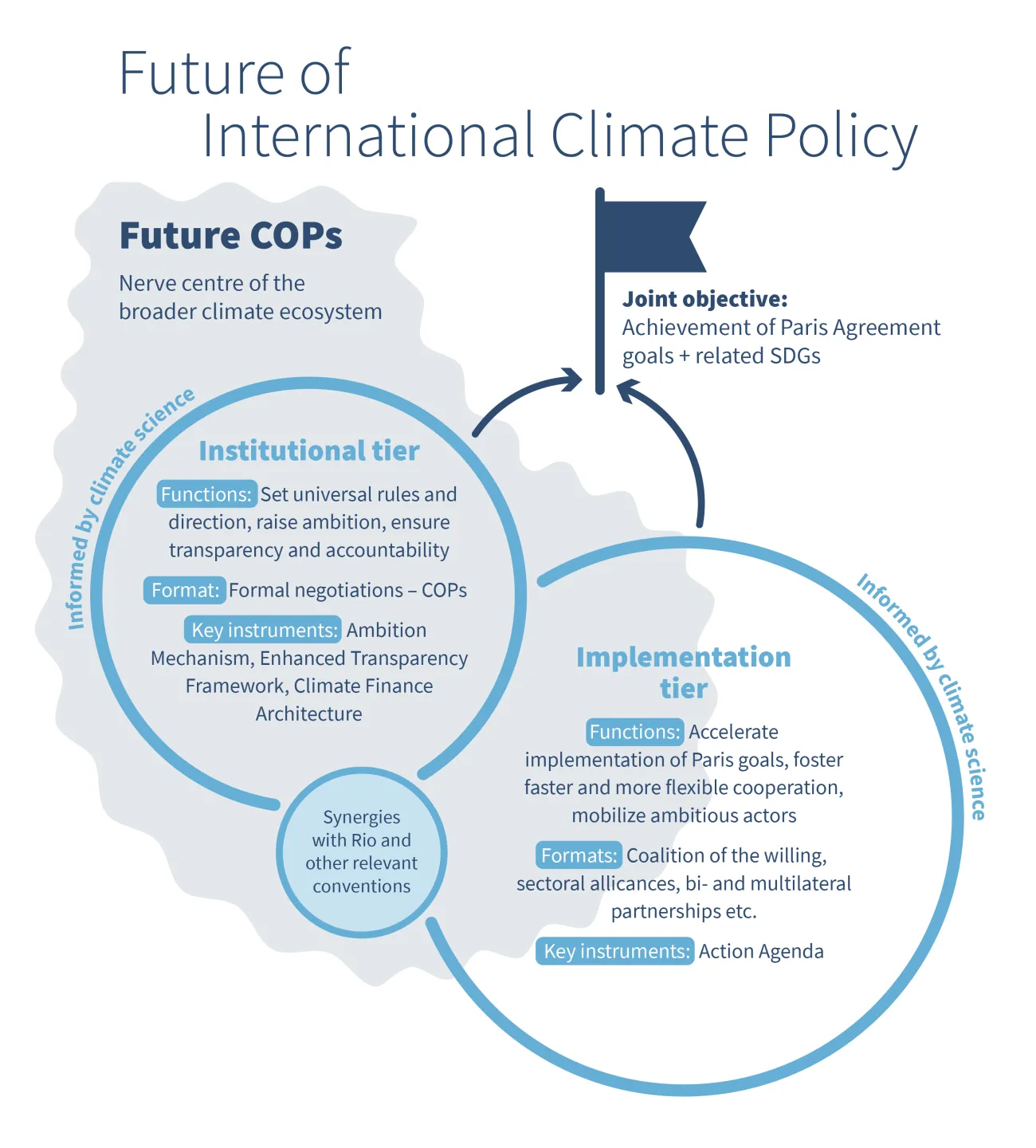
We propose a two-tiered model of climate multilateralism that combines the UNFCCC's universal rule-setting, accountability, and legitimacy functions with a more flexible implementation tier based on frontrunner alliances, bilateral partnerships, and sector-specific cooperation. Under this model, future COPs would evolve from negotiation-heavy conferences into implementation, ambition, accountability, and finance-mobilization spaces that accelerate delivery of agreed climate goals.
The paper concludes that Germany and the EU should champion this transition by focusing climate diplomacy on ambition, implementation, supporting ambitious coalitions, strengthening climate partnerships, advancing pragmatic UNFCCC reforms, and leading by example through accelerated domestic decarbonization.
Germanwatch / Karin Roth