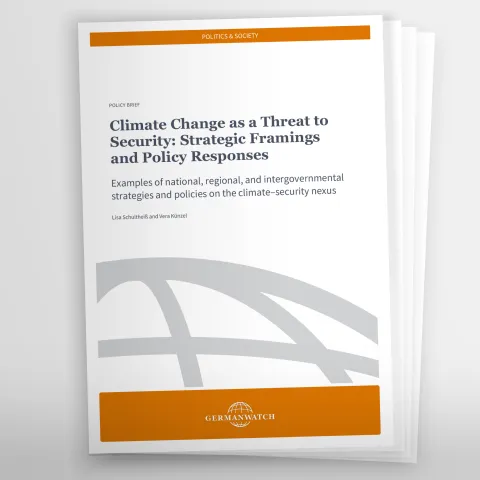
Climate change is increasingly recognised not only as an environmental challenge but as a matter of security. However, there is limited systematic comparative analysis of how climate change is framed and hence understood as a security issue across different national and international policy contexts. This study therefore aims to systematically assess:
(1) how states and international organisations define climate-related security risks, (2) which dimensions of security are prioritised (national, international, human, or ecological security), (3) which climate risks receive the greatest attention – such as extreme weather events, slow-onset changes, or tipping points, and (4) which policy responses are derived from these understandings.
The study analyses national security, foreign policy, defence strategies, and climate risk assessments from Germany, the United Kingdom, Norway, the Philippines, Kenya, and Vanuatu. It is complemented by official statements and strategies from the United Nations, NATO, the European Union, the African Union, the OECD, and the Pacific Islands Forum. This selection captures diverse regional contexts, levels of climate vulnerability, and geopolitical perspectives.