Electrification can be a game changer for the energy transition – but only if the power is renewable, the transition is just, and all countries have the means to implement it.
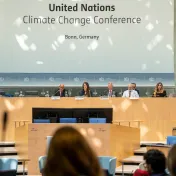
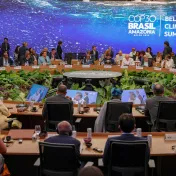
At the 28th international climate conference (COP28), governments agreed to triple renewable energy capacity, double energy efficiency, and transition away from fossil fuels, establishing a clear direction for the global energy transition. At COP29, Parties added further commitments to expand energy storage and modernise electricity grids. At COP30, although governments did not reach consensus on a formal global roadmap for a just transition away from fossil fuels, the Brazilian Presidency’s efforts reflected growing political support for moving from high-level commitments towards practical implementation. Now, ahead of COP 31, the incoming Turkish COP Presidency has proposed a further building block in this energy transition architecture. The ‘35 by 35’ target aims to increase global electricity’s share of final energy consumption to 35% by 2035.
This ambition is welcome, but a target is only as strong as its implementation. COP31 must ensure that electrification accelerates the transition away from fossil fuels rather than shifting demand from one fossil-fuelled part of the energy system to another.
What is electrification and why is everybody talking about it?
Electrification is having a moment. From electric cars and heat pumps to expanding data centres, electricity is becoming an increasingly important part of how we power our economies. For climate policy, this matters enormously. Switching transport, heating, and industry from fossil fuels to electricity can significantly reduce energy use and dependence on burning oil and gas.
But electrification does not mean the same everywhere. In many countries in the Global South, it is still fundamentally about providing access to reliable, affordable, and safe electricity to households, communities, and businesses. In industrialised countries, the focus is increasingly on switching from fossil fuels to electricity in transport, buildings, and industry. Meanwhile, new sources of demand, from cooling and digitalisation to data centres, are reshaping electricity systems everywhere.
This shows that there is no one-size-fits-all solution to electrification. It must reflect different national circumstances and development needs.
Electrification only works with renewable power
Electrification can make energy use much more efficient, but it does not automatically make it cleaner. A heat pump powered by coal-fired electricity, for example, cannot deliver the same emissions reductions as one running on renewable power.
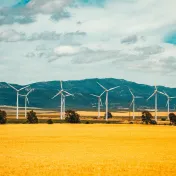
That is why countries must simultaneously advance electrification and the deployment of renewable energy, while reducing their reliance on fossil fuels.
The proposed ‘35 by 35’ target currently does not sufficiently address where the electricity will come from. Without a clear renewable-energy component, countries could increase electricity consumption while continuing to rely on fossil-fuel power. That would miss the point. The goal must be renewable-based electrification.
None of this works without grids
As demand rises in the transport, buildings, and industry sectors, power systems will need to transmit and distribute much more electricity. At the same time, integrating more wind and solar power requires grids capable of managing generation that varies depending on the weather and the time of day, balancing it with shifting demand across time and space. That means investing in major transmission lines, in distribution networks, storage, and decentralised systems such as mini grids. Batteries can help by storing renewable power when it is plentiful and releasing it when demand is higher. Yet in many countries, particularly across the Global South, electricity infrastructure remains constrained by years of limited investment. The challenge is therefore to build and modernise the infrastructure that can connect, integrate, move, and deliver renewable-based electricity precisely where it is needed.
The energy transition must reduce, not reproduce, extractive pressures
There is another challenge. The energy transition must not simply replace one form of extractivism with another. Mining the critical minerals needed for electric vehicles, batteries, grids, and solar PVs can damage ecosystems, pollute water and soils, and displace communities. Using energy and materials more efficiently is therefore essential to minimising the new extraction required by the transition.
Energy efficiency should therefore be central to delivering the ‘35 by 35’ target. In practice, this encompasses everything from better-insulated buildings and more efficient heating and cooling to public transport and smarter demand-side management.
Circularity also has an important role to play. Keeping metals and other critical materials in use for longer through reuse, repair, refurbishment, and high-quality recycling can reduce demand for extraction and the associated impacts on ecosystems and communities. Circularity should feature prominently within the COP31 Action Agenda. Turkey’s proposed target to increase circular material use to 15% by 2035 could be an important opportunity to integrate resource efficiency into the wider energy transition, particularly regarding metals and other materials that are critical to electrification.
At the same time, electrification should follow just transition principles. This requires promoting responsible and transparent critical mineral supply chains, supporting local value creation and industrial development in producing countries, and investing in skills, decent work, and the meaningful participation of workers and affected communities.
Global ambition must be translated into tailored national action, backed by international support
The global energy transition is gaining momentum, but countries are not starting from the same place or moving at the same pace. Asia’s rapid progress in electrification shows how quickly some regions can move, with several Asian countries increasingly outpacing Europe and the US. Africa, by contrast, still faces major gaps in electricity access. Here, the challenge is to bring reliable, affordable power to millions of people for the first time. This is why the implementation of the global ‘35 by 35’ target cannot follow a one-size-fits-all approach. Instead, the goal needs to be translated into ambitious national strategies that reflect each country’s circumstances, capabilities, and energy needs.
For many developing countries, the transition also creates an opportunity to leapfrog fossil fuels. Renewable energy and electrification now rank among the most cost-competitive options, opening the door for countries to build renewable energy systems without taking the carbon-intensive development paths of wealthier economies. Yet the countries with the greatest potential to leapfrog fossil fuels are often those facing the most severe financial barriers. High debt, limited fiscal space, and the high cost of capital make it difficult to mobilise the investment needed for renewable energy, modern grids, and expanded electricity infrastructure.
This is why the success of the ‘35 by 35’ target will depend on whether poorer countries have the means to participate. Wealthier countries have a responsibility to help create the conditions for an inclusive transition through finance, technology, and capacity building. Wealthier countries should deliver meaningful support so that every country can benefit from a renewable and electrified energy future.
Building a broad alliance and sustaining progress
The ultimate success of COP31 will depend to some extent on whether a broad coalition of countries can turn the ‘35 by 35’ target into real progress towards a just, orderly, and equitable transition away from fossil fuels.
Leaders must turn the growing momentum behind electrification into a collective and sustained delivery effort that accelerates progress towards tripling renewable energy capacity, doubling the rate of energy efficiency improvement, and transitioning away from fossil fuels. Electrification can play a central role in delivering this transition, but only if it is renewable, efficient, and just, and if every country has the means to participate.
There is an opportunity to bring together frontrunner countries from both the Global South and the Global North and to use the Action Agenda to turn shared ambition into concrete action. COP31 should build on the progress made at previous COPs, avoid backsliding on existing commitments, and strengthen international cooperation on renewable-based electrification.
By the time of the next Global Stocktake in 2028, countries should be in a position to assess progress in implementing the global energy transition commitments agreed at previous COPs and set more ambitious targets beyond 2035.
For more information see our policy paper on renewable electrification.