COP31 in Antalya must elevate adaptation politically, unlock progress on finance and implementation, and prepare the ground for COP32 in Addis Ababa to deliver concrete outcomes for vulnerable countries and communities.
It’s 2026, and the climate crisis is intensifying. Heatwaves are sweeping across Europe; floods are devastating communities worldwide; and ice and rock avalanches in Nepal highlight the growing risks in mountainous regions. With the world facing a 1.5°C global warming overshoot, climate action must advance on two fronts simultaneously: reducing emissions and building climate resilience. Cutting emissions remains essential, but the climate crisis has reached a magnitude where we must also prepare for its rapidly increasing impacts.
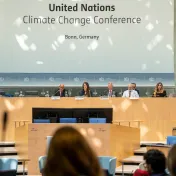
The climate talks in Bonn (SB64) in June 2026 exposed the gap between real adaptation needs on the ground and political stagnation at the UNFCCC. Negotiations on the Global Goal on Adaptation (GGA) ended without agreed conclusions, leaving key questions unresolved, including adaptation finance, the task force’s mandate to further develop the Belém Adaptation Indicators and the future of the Baku Adaptation Roadmap (BAR).
COP31 in Antalya must change this trajectory. It must elevate adaptation to a political priority in the final COP package, break the deadlock in the negotiations, and pave the way for political progress so that agreement can be reached on the foundations for implementation. We must not allow finance for and implementation of meaningful adaptation measures to keep falling far short of what vulnerable countries and communities urgently need. Negotiations cannot risk losing sight of the bigger picture. Key areas that need to be prepared for decision-making in Addis Abeba next year at the latest include:
- adaptation finance (through tripling adaptation finance and need-based approaches, Adaptation Fund, support for National Adaptation Plans);
- a more effective adaptation architecture under the UNFCCC designed to foster implementation, strengthen links to just transition, integrate adaptation priorities into the second Global Stocktake, and address the limits of adaptation (Baku Adaptation Roadmap);
- effective monitoring and reporting (GGA indicators, AdComs).
Precondition for adaptation wins
1. Elevating the policial standing of adaptation for a balanced COP decision package
While the needs grow, there is no need to start from scratch when designing adaptation measures. Solutions already exist, helping communities build resilience: drought-resistant crops and rainwater harvesting in drought-prone regions, mangrove restoration and coastal wetlands that reduce flood and storm-surge risks, urban greening and heat action plans that protect people during heatwaves, and community-based early warning systems that enable people to prepare for extreme weather events and floods. In India and Bangladesh cyclone preparedness and early warning systems have helped communities respond to severe storms; in African drylands farmer-managed natural regeneration and agroforestry are restoring degraded land and strengthening resilience to drought. These experiences offer valuable lessons not only for the most climate-vulnerable countries but also for wealthier nations increasingly exposed to extreme heat, floods, and droughts. The challenge is to scale up tried-and-tested approaches, adapt them to changing risks, and ensure that they reach the people who need them most. As climate impacts intensify, incremental action alone will no longer be enough. What is needed is sustained, targeted investment in locally led and, where necessary, transformative adaptation. Rather than merely incurring costs, climate adaptation offers a chance to invest in resilient livelihoods, stronger communities, and a more just future that secures global stability.
COP31 must therefore make sure that adaptation receives the political attention it requires. This means that Parties need to move beyond defending institutional positions and procedural boundaries. The COP Presidencies and the Parties should include the GGA in the COP31 package as a key negotiation item and political deliverable. For vulnerable countries and communities facing escalating climate impacts, credible progress on adaptation is an essential outcome of the UNFCCC process. Developed countries, including Germany and other EU members, must demonstrate the flexibility needed to bridge differences and deliver meaningful progress. They should engage in alliances with vulnerable countries to understand their needs, and they should work for a more comprehensive solution during adaptation negotiations and at the Action Agenda in Addis Abeba.
The role of Germany and the EU
Germany and the EU must underpin their claims to a climate leadership role with constructive engagement. The EU and Germany must finally recognise adaptation as an essential pillar of climate action in its own right, treating it with the same importance as mitigation. Adaptation is no longer an issue that affects developing countries alone, but a global imperative and a global public good: the EU and Germany must protect their own populations from escalating climate impacts while fulfilling their moral obligation to support developing countries in adapting to a crisis to which the latter have contributed the least. The EU and Germany must therefore make adaptation a core objective of their climate policies and treat it as a tangible deliverable, both at home and internationally. Adaptation should be an integral part of their overall COP31 negotiating strategy – not a separate issue to be settled once progress on mitigation has been secured.
Furthermore, if the EU wants emerging economies to show greater ambition regarding emissions reductions, energy transitions, and the implementation of their climate commitments, it must be prepared to make meaningful concessions on issues that matter to developing countries.
For the COP31 strategy, three priorities stand out under the GGA: agreeing to a balanced, workable technical task force for the Belém Adaptation Indicators, preparing a way forward for the Baku Adaptation Roadmap, and supporting a credible process towards adequate adaptation finance. Instead of viewing these steps as concessions that weaken the EU’s negotiating position, European negotiators should take them to build trust and unlock a more ambitious overall package. This means defining clear reciprocal adaptation outcomes early on, coordinating across negotiating tracks – especially with the finance rooms –, and engaging directly with key developing-country groups for building alliances before ministers arrive in Antalya. The EU should also make clear which concrete adaptation outcomes it prioritises and where it is prepared to show flexibility in return for greater ambition elsewhere. A package that combines stronger mitigation commitments with credible progress on adaptation finance and implementation would be more politically balanced, strengthen North–South cooperation, and demonstrate that ambition and solidarity can go hand in hand.
2. Overcoming the narrow focus on a task force and indicators
Adaptation is not merely a technical exercise in defining indicators and reporting, as the UNFCCC negotiations might imply. Climate adaptation protects lives, livelihoods, and development gains, particularly in vulnerable communities. It is essential for equity, sustainable prosperity, and global stability.
At SB64, Parties focused on discussing the taskforce under the Belém-Addis-Vision (BAV) – and ultimately failed to agree. This means that negotiations in Antalya will start from a difficult position.
The GGA indicator taskforce needs to be enabled. Under the BAV, Parties should agree to a pragmatic mandate and workable composition for the taskforce so that the Belém indicators can be tested and refined in practice. Agreement on this needs to be reached early on in the first week of COP31 to make sure that Parties can discuss other pressing issues as well.
The role of Germany and the EU
Germany and the EU should show flexibilityregarding the composition of the task force and ensure that the indicator work can continue in such a way that technical outcomes gain political acceptance in Addis Ababa.
3. Showing goodwill on and contributing to adaptation finance
Increasing adaptation finance (whether needs-based or tripling language) is a key concern for many Global South countries. But countries from the Global North seem unwilling to include corresponding language in the GGA and would rather discuss it in a yet undefined finance room. The Climate Finance Work Program is in a complicated phase of finding its shape and form. Parking the discussion there is just a way of avoiding the conversation, at least at this COP. A mention in the cover decision does not have the significance and follow-up this critical topic deserves either.
COP31 must deliver on the commitment to triple adaptation finance. It should translate the commitment to triple adaptation finance into a clear trajectory, timeline, and accountability framework with a clear baseline and responsibilities, and with a strong focus on accessible, predictable, and grant-based finance for vulnerable countries and communities. The scope of adaptation finance should be broad enough to encompass needs-based approaches.
The role of Germany and the EU
Germany and the EU must live up to their status as largest contributors to the Adaptation Fund by making new commitments during COP31. Furthermore, they should acknowledge that past adaptation finance has fallen short of growing needs. They should allow the adaptation finance discussion to take an honest and constructive direction – including a debate on the transition of the Adaptation Fund under the Paris Agreement and a space to discuss tripling and needs-based adaptation finance.
4. Not losing sight of the Baku Adaptation Roadmap and the bigger picture
The BAR has not yet been discussed in sufficient detail to fully realise its potential as a fit-for-implementation home for adaptation under the UNFCCC. This is a missed opportunity as it is the one space where, if done correctly, a more comprehensive approach to adaptation has an agenda item.
COP31 needs to prepare a clear implementation mandate for the Baku Adaptation Roadmap. COP31 should prepare a concrete way forward for the BAR, driving forward implementation and ensuring that it supports delivery of the GGA. This includes strengthening the coherence of the adaptation framework and the adaptation architecture both within and outside the UNFCCC, facilitating the exchange of best practices including linkages in development plans and the just transition framework with adaptation, and initiating discussions on the review of the UAE Framework for Global Climate Resilience while aligning technical work with the second Global Stocktake timeline.
The role of Germany and the EU
The EU and Germany should advocate for a clearimplementation mandate for the BAR, reconnecting to the EU’s earlier BAR submission and carefully considering the UNFCCC adaptation architecture. The roadmap’s 2026–2028 phase should focus on implementation and knowledge exchange. Looking ahead, the EU and Germany should advocate for practical implementation guidance, closer links with national adaptation and development plans, and strict accountability.
From political recognition to real resilience: Adaptation outlook to COP32 in Addis Abeba
The world does not lack evidence that adaptation is needed. What is lacking is a political response, finance, and implementation support commensurate with that need. COP31 must elevate adaptation, remove key negotiating blockages, and establish the foundations for delivery. COP32 must then build on these foundations in order to secure the actual provision of finance and to establish an implementation framework that connects targets, resources, and accountability. Ultimately, the GGA will not be judged by the number of indicators agreed or workshops completed, but by whether people are safer, livelihoods are protected, and vulnerable communities have the resources to build resilience.